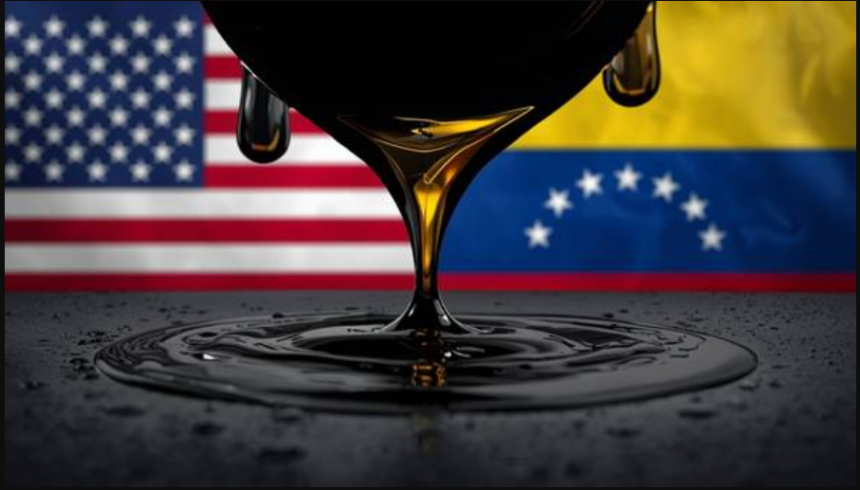
In 2025, Venezuela has once again become a focal point of global economic and geopolitical attention. Political instability, fragile negotiations with Western countries, and uncertainty around oil production have raised a critical question for markets: will events in Venezuela lead to a drop in global oil prices — or trigger new volatility?
Understanding what is happening in Venezuela today is essential for governments, investors, and energy-dependent economies.
Venezuela’s Oil Paradox
Venezuela holds the largest proven oil reserves in the world, yet its actual production remains far below potential due to chronic underinvestment, maintenance issues, and political turmoil. According to the U.S. Energy Information Administration, Venezuela’s reserves exceed those of Saudi Arabia, but production has struggled to recover to historical levels.
👉 Source: U.S. Energy Information Administration (EIA) — Venezuela Petroleum and Other Liquids
https://www.eia.gov/international/analysis/country/VEN
Despite efforts to stabilize output, Venezuela’s oil sector still faces:
- outdated refining infrastructure
- lack of foreign investment
- skilled labor shortages
- political and legal uncertainty
As a result, Venezuela produces only a fraction of its potential — limiting its immediate impact on global oil supply.
Political Developments and Sanctions Pressure
Recent political developments have influenced market expectations around Venezuela. The United States and its allies have considered conditional sanctions relief if electoral reforms and transparency measures are adopted. However, uncertainty persists due to shifting diplomatic priorities.
👉 Source: Reuters — U.S., EU debate sanctions on Venezuela amid political reforms
https://www.reuters.com/world/americas/us-eu-discuss-venezuela-sanctions-reforms-2025-01-10
This creates two possible scenarios:
- Partial sanctions relief, allowing Venezuela to export more oil
- Renewed sanctions or political escalation, restricting supply further
Markets are highly sensitive to these signals, as even modest increases in Venezuelan exports could influence oil price expectations.
Will Oil Prices Fall?
A sudden collapse in oil prices due to Venezuela alone is unlikely. Global oil pricing depends on a complex balance involving:
- OPEC+ production policies
- Middle East geopolitics
- U.S. shale output
- Global demand trends
According to the International Energy Agency (IEA), oil markets in 2025 remain volatile but resilient, and shifts in supply must be considered alongside demand forecasts and strategic stockpiles.
👉 Source: International Energy Agency (IEA) — Oil Market Report
https://www.iea.org/reports/oil-market-report
However, incremental increases in Venezuelan supply could contribute to downward pressure, especially if combined with:
- slowing global economic growth
- rising inventories
- reduced demand from major consumers
In this context, Venezuela acts as a secondary but strategic factor rather than a decisive one.
Who Benefits from Lower Oil Prices?
If Venezuelan oil re-enters the market more freely, several groups stand to benefit:
- Oil-importing countries could see lower energy costs
- Manufacturing and transport sectors could benefit from reduced fuel expenses
- Consumers, through lower inflation and energy prices
At the same time, oil-exporting nations may face revenue pressure, increasing geopolitical competition.
How Can Investors Take Advantage?
For investors, volatility around Venezuela presents both risks and opportunities:
- Energy traders may benefit from short-term price swings
- Industries dependent on fuel could see improved margins
- Long-term investors may monitor companies positioned to re-enter Venezuela if sanctions ease
However, political risk remains high, and any investment strategy must account for sudden reversals in policy.
The Broader Geopolitical Impact
Venezuela’s situation reflects a broader trend: energy is once again a geopolitical weapon. Sanctions, supply controls, and political alliances shape markets as much as supply and demand fundamentals.
👉 Source: Foreign Affairs — The Weaponization of the Global Oil Market
https://www.foreignaffairs.com/articles/world/weaponization-global-oil-market
As the global energy transition accelerates, oil-producing nations like Venezuela face a narrowing window to capitalize on their reserves — making current events even more consequential.
Conclusion
Events in Venezuela alone are unlikely to crash oil prices, but they can amplify existing trends in an already fragile global energy market. Whether through sanctions relief, political reform, or renewed instability, Venezuela remains a wild card — one that markets cannot afford to ignore.
For policymakers, businesses, and investors alike, the key lies not in predicting a single outcome, but in preparing for continued volatility.
🔗 Key Sources Referenced:
- U.S. Energy Information Administration (EIA) — Venezuela oil profile
https://www.eia.gov/international/analysis/country/VEN - Reuters — U.S., EU discuss Venezuela sanctions
https://www.reuters.com/world/americas/us-eu-discuss-venezuela-sanctions-reforms-2025-01-10 - International Energy Agency (IEA) — Oil Market Report
https://www.iea.org/reports/oil-market-report - Foreign Affairs — Oil market geopolitics
https://www.foreignaffairs.com/articles/world/weaponization-global-oil-market