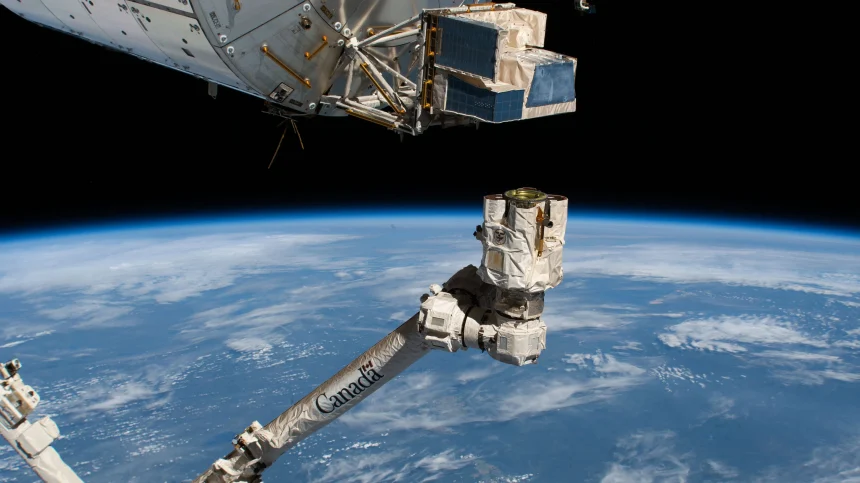
For decades, long-duration spaceflight has presented one of the greatest challenges to human health: the effects of microgravity. Without the constant pull of Earth’s gravity, astronauts experience muscle atrophy, bone density loss, cardiovascular deconditioning, and even vision changes. As NASA prepares for missions to the Moon, Mars, and beyond, the need to simulate gravity in space has never been more urgent. In 2025, NASA unveiled the latest results from its artificial-gravity experiments, offering promising insights into how humanity might live and work safely in deep space.
The Rationale Behind Artificial Gravity
Gravity is fundamental to human physiology. On Earth, the force of gravity helps maintain bone density, muscle mass, blood flow, and balance. In microgravity, these systems deteriorate rapidly. Astronauts aboard the International Space Station (ISS) can exercise for two hours daily to mitigate these effects, yet some bone loss and muscle weakness still occur over months in orbit.
Artificial gravity aims to replicate the physiological benefits of Earth’s pull without requiring a planetary surface. By creating centripetal force through rotation or other mechanical systems, artificial gravity could allow astronauts to maintain muscle and bone health, improve cardiovascular function, and reduce long-term health risks. It also has implications for mental well-being, as gravity helps regulate circadian rhythms and spatial orientation.
The Latest NASA Experiments
NASA’s 2025 experiments focused on small-scale artificial-gravity environments, using rotating platforms, centrifuges, and partial-gravity simulators. The goal was to determine the minimum level of gravity needed to maintain physiological health. Researchers tested different rotation speeds and radii to balance comfort and effectiveness, observing how participants’ cardiovascular systems, muscles, and bones responded over extended periods.
These experiments included both human volunteers on Earth and animal models, allowing scientists to study the cellular and systemic effects of partial gravity. Advanced imaging, motion tracking, and biomarker analysis provided detailed data on how the body adapts to simulated gravitational environments.
Key Findings From the Tests
The results were striking. NASA researchers discovered that even partial gravity, equivalent to about 0.3 to 0.5 times Earth’s gravity, significantly mitigates muscle atrophy and bone loss. Participants who spent hours per day in artificial-gravity environments maintained more muscle mass and showed fewer markers of bone degradation compared to control groups in microgravity simulations.
Additionally, cardiovascular performance improved. Heart rate, blood pressure, and vascular function remained closer to normal, suggesting that artificial gravity could reduce orthostatic intolerance — the difficulty astronauts face when standing or moving upon returning to Earth’s gravity. Participants also reported less dizziness, improved spatial orientation, and better sleep quality, highlighting potential cognitive and psychological benefits.
Implications for Future Space Missions
These findings have profound implications for the future of human space exploration. Long-duration missions to Mars or lunar bases could incorporate rotating living quarters or centrifuge modules, providing astronauts with intermittent exposure to artificial gravity. Even short daily periods in such environments could reduce the need for rigorous exercise regimens, decrease medical risks, and enhance overall mission performance.
Artificial gravity could also expand the possibilities of spacecraft design. By integrating rotation-based gravity into habitats, engineers can create more comfortable and functional living spaces. This approach may reduce reliance on bulky exercise equipment, freeing up space and resources for research, cargo, and other mission-critical operations.
Challenges and Considerations
Despite the promise, artificial gravity is not without challenges. Rapid rotation can cause motion sickness, disorientation, and vestibular stress. Engineers must carefully design radius and rotation speed to minimize these effects while maintaining sufficient force. Long-term exposure studies are still needed to determine optimal schedules and ensure that partial gravity is sustainable over months or years.
Other logistical considerations include structural engineering, energy requirements, and the impact of gravity gradients on objects, fluids, and equipment inside rotating habitats. NASA’s ongoing experiments aim to address these challenges, paving the way for practical implementation in real missions.
Looking Ahead: The Future of Artificial Gravity
NASA’s 2025 experiments mark a significant step toward making long-term space habitation viable. By demonstrating that even partial artificial gravity can preserve human health, the research opens the door to safer, more efficient deep-space travel. Future studies will likely explore long-duration exposure, combined exercise protocols, and integration with spacecraft design.
As missions to Mars and beyond move from concept to reality, artificial gravity may become a cornerstone of astronaut health. The ability to simulate Earth-like conditions in orbit or on other celestial bodies could transform how we think about life in space, making extended exploration, scientific research, and even permanent habitation feasible.